
Your Garage Door Springs Are Working Harder Than You Think
Every time you open and close your garage door, the springs do the heavy lifting — literally. A standard residential garage door weighs between 130 and 250 pounds, and the springs are responsible for counterbalancing all of that weight. Your garage door opener doesn't actually lift the door; the springs do. The opener just provides the motorized push to get things moving.
Most torsion springs are rated for about 10,000 cycles, with one cycle being a single open-and-close. If you use your garage door four times a day, that's roughly seven years of life. But many homeowners in Hillsboro don't think about their springs until the day one snaps — and that's usually the worst possible morning for it to happen.
The good news is that failing springs almost always give warning signs before they break. If you know what to look for, you can schedule a replacement on your terms instead of dealing with an emergency.
7 Warning Signs Your Garage Door Springs Are Failing
1. Your Door Feels Heavier Than Usual
Try this simple test: pull the emergency release cord to disconnect your opener, then manually lift the door about halfway. A properly balanced door should stay in place on its own. If it feels noticeably heavy, slides back down, or requires real effort to lift, your springs are losing tension. This is one of the earliest and most reliable indicators that a spring replacement is in your near future.
2. The Door Opens Unevenly or Crooked
If your garage door tilts to one side as it opens, one spring may be weaker than the other. On a two-spring system, springs rarely wear out at exactly the same rate. When one side loses tension faster, the door pulls unevenly along the tracks. Left unchecked, this puts extra stress on your tracks, rollers, and opener — turning a spring problem into a much bigger repair bill.
3. You Hear a Loud Bang From the Garage
If you heard a loud bang — almost like a gunshot — coming from your garage when no one was in there, a spring likely just broke. When a torsion spring snaps, the energy release is sudden and violent. The spring unwinds rapidly and the sound echoes through the garage. If this has already happened, do not attempt to open the door. A garage door with a broken spring is extremely heavy and dangerous to operate manually.
4. There's a Visible Gap in the Spring
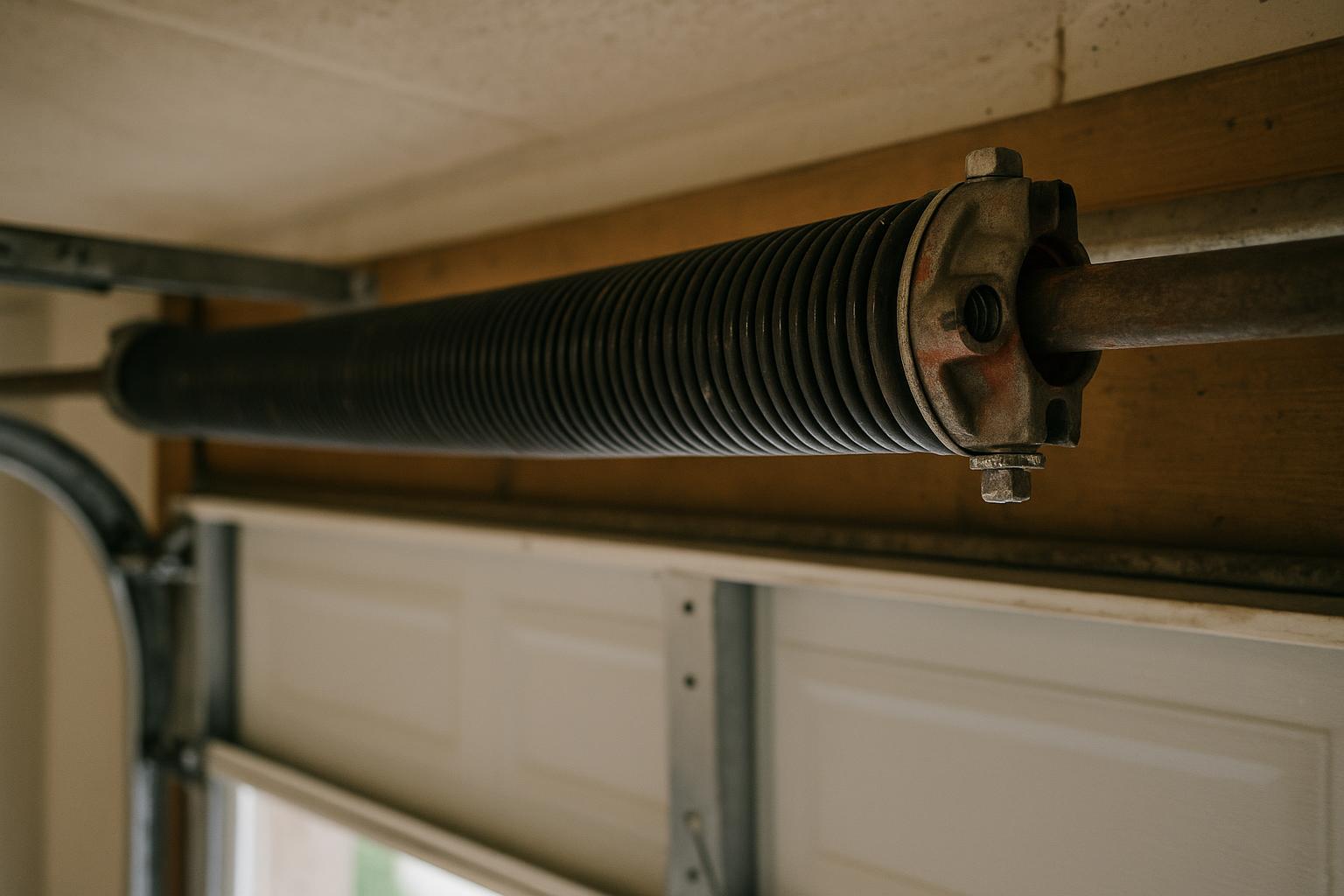
Take a look at the torsion spring mounted above your garage door. A healthy spring is a tightly wound coil with no gaps between the coils. If you see a visible separation — a gap of an inch or more in the middle of the spring — it has already broken. This is the most obvious visual confirmation, but many homeowners never look up to check until the door stops working.
5. Your Opener Is Straining or Stopping Mid-Cycle
When springs weaken, your garage door opener has to compensate by working harder. You might notice the motor sounds louder, the door moves slower, or the opener stops partway through a cycle. Some homeowners in the Hillsboro area assume the opener itself is failing and consider replacing it, when the real culprit is worn-out springs. Replacing the springs often restores normal opener performance immediately.
6. The Door Slams Shut Quickly
Healthy springs control the speed of your garage door as it closes. If your door drops the last foot or two instead of lowering smoothly, the springs aren't providing enough counterbalance. This is a safety concern, especially if you have kids, pets, or vehicles in the path of the door. A fast-closing door can cause serious injury or property damage.
7. Your Springs Are Visibly Rusty or Corroded
Oregon's damp climate is tough on metal components. If your springs show significant rust or corrosion, their structural integrity is compromised. Rust weakens the steel and accelerates wear, which means the spring could fail well before reaching its expected cycle life. Regular lubrication can slow this process, but heavily corroded springs should be inspected by a professional to determine if replacement is needed.
Why You Should Never Replace Garage Door Springs Yourself
We understand the DIY impulse — plenty of Hillsboro homeowners are handy and capable. But garage door springs are under extreme tension, and working with them requires specialized tools and training. A torsion spring that slips during installation can cause severe injuries, including broken bones, lacerations, and worse. Every year, emergency rooms across the country treat people who attempted DIY spring replacements.
Professional technicians use calibrated winding bars, know the exact spring specifications for your door's weight and size, and can safely manage the tension involved. It's one of those jobs where the risk simply isn't worth the savings.
Should You Replace One Spring or Both?
If one spring breaks and you have a two-spring system, we strongly recommend replacing both at the same time. Here's why: both springs were installed at the same time and have experienced the same number of cycles. If one has failed, the other is likely close behind. Replacing both springs together means one service call, one labor charge, and balanced performance from day one. Replacing just one often leads to a second service call within months.
How Often Should Springs Be Inspected?
We recommend a visual inspection of your springs at least twice a year — once in the fall before the cold months and once in the spring. Look for rust, gaps, and signs of stretching. You should also perform the manual balance test described above every few months. If anything seems off, it's better to have a technician take a look before you're stuck with a door that won't open on a Monday morning.
An annual preventive maintenance visit is also a smart investment. During a maintenance appointment, we inspect the springs, lubricate moving parts, check cable condition, test the balance, and tighten hardware. It's a straightforward service that extends the life of your entire garage door system.
Don't Wait for the Snap
A broken garage door spring is one of the most common emergency calls we get from homeowners across Hillsboro, Beaverton, Aloha, and the surrounding communities. In almost every case, the homeowner tells us they noticed something was off weeks or even months before the spring finally gave out. A little attention now can save you from being stuck in your garage — or locked out of it — at the worst possible time.
If you've noticed any of the warning signs above, or if your springs are more than seven years old, give Hillsboro Garage Door Pro a call. We'll assess your springs honestly, explain your options clearly, and get the job done right — safely and on your schedule.