
That Frustrating Reverse: What's Going On?
You press the button on your garage door remote, the door starts its descent, and then — just before it reaches the floor — it stops and reverses back up. You try again. Same thing. Maybe you try holding the wall button. Still reverses.
This is one of the most common garage door complaints we hear from homeowners in Hillsboro, especially during the wetter months when temperature swings and moisture can affect your system. The good news is that a reversing garage door is usually a safety feature working exactly as designed. The bad news is that something is triggering it when it shouldn't be.
Let's walk through the most common causes and what you can do about each one.
1. Misaligned or Dirty Safety Sensors
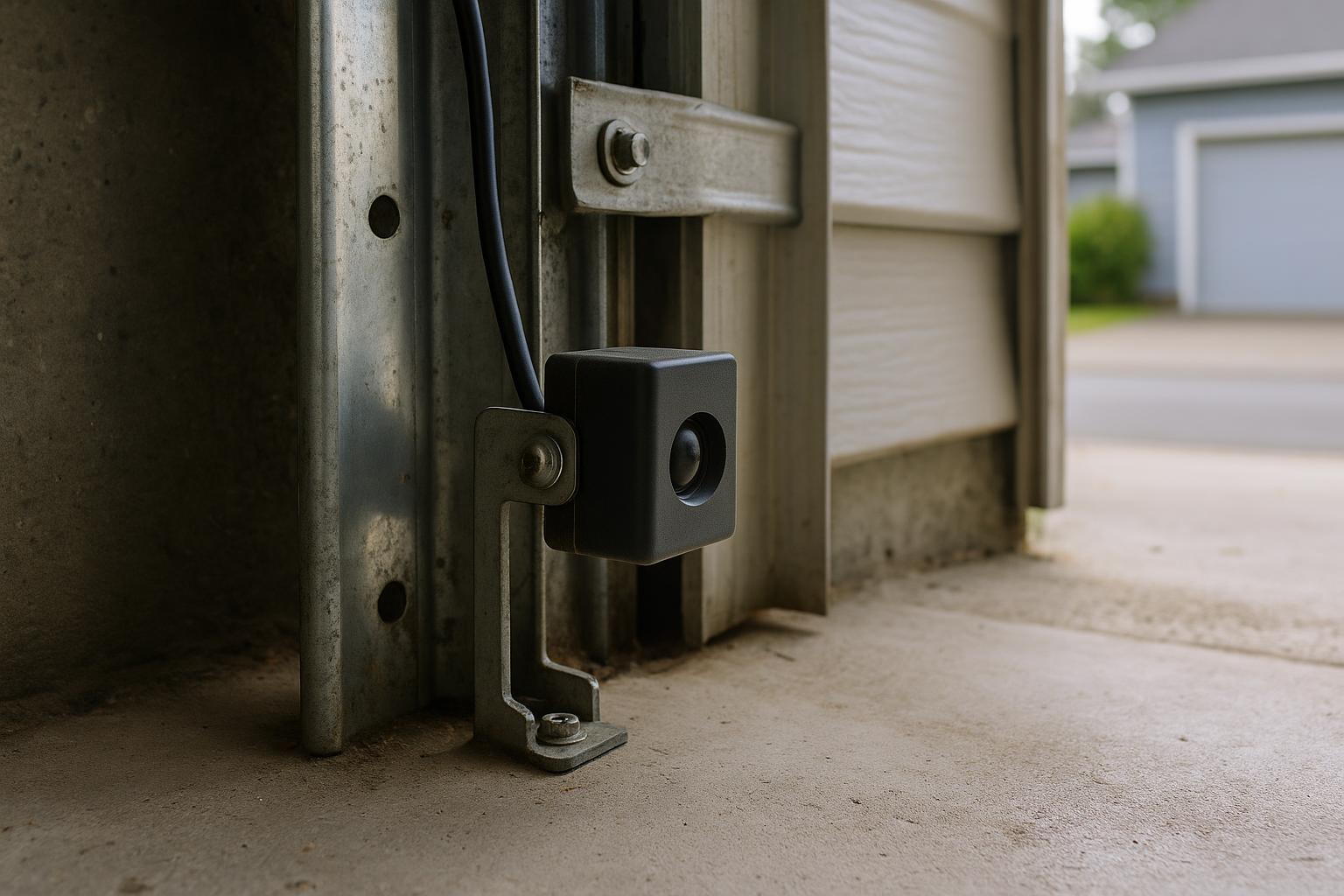
Every garage door opener manufactured after 1993 is required to have photo-eye safety sensors mounted near the bottom of the door tracks, about six inches off the ground. These sensors send an invisible beam across the opening. If anything breaks that beam — a bike, a trash can, a child, or even a spiderweb — the door reverses to prevent injury or damage.
This is the number one reason garage doors reverse prematurely. Here's what to check:
- Alignment: Both sensors should have steady LED lights (usually green on one side, amber on the other). If one is blinking, the sensors are misaligned. Gently adjust the blinking sensor until the light holds steady.
- Dirt and debris: Wipe both sensor lenses with a soft cloth. Dust, cobwebs, and water spots can interfere with the beam.
- Sunlight interference: In certain positions, direct afternoon sun can overwhelm the sensor's infrared beam. A small cardboard shade or repositioning may help.
If you've cleaned and realigned the sensors and the problem persists, the wiring between the sensors and the opener may be damaged or a sensor may need replacement.
2. The Close-Force Setting Needs Adjustment
Your garage door opener has a force setting that determines how much resistance the motor will push through before it assumes something is in the way and reverses. If this setting is too low, the door may reverse when it encounters even normal friction from the tracks, weatherstripping, or the floor.
Most openers have a small adjustment dial or screw labeled "close force" or "down force" on the back or side of the motor unit. Turning it up slightly — a quarter turn at a time — can solve the problem. However, be careful not to set it too high, as this can override the safety reverse and create a hazard.
If you're unsure about adjusting force settings, this is a quick fix any qualified technician can handle during a routine service call.
3. Worn or Damaged Tracks
Over time, the metal tracks that guide your garage door can develop bends, dents, or buildup of grime and rust. When the rollers hit these imperfections, the opener interprets the sudden resistance as an obstruction and reverses the door.
Visually inspect both tracks from top to bottom. Look for:
- Visible dents or bends in the metal
- Sections where the track has shifted away from the wall
- Rust, paint drips, or hardened grease buildup
Minor debris can be cleaned out, but bent or misaligned tracks should be repaired by a professional. Attempting to hammer out dents or force tracks back into position without the right tools can make the problem worse.
4. Travel Limits Are Set Incorrectly
Your opener uses travel limit settings to know where the door should stop when fully open and fully closed. If the "down" travel limit is set too far, the motor keeps pushing after the door has already hit the floor. The opener senses this extra resistance and reverses.
This is especially common after a new opener installation or after a power outage resets the unit. Adjusting the down travel limit by small increments usually solves the issue. Your owner's manual will have specific instructions for your model.
5. Broken or Worn Springs
Garage door springs do the heavy lifting — literally. They counterbalance the weight of the door so the opener motor only needs to provide a small amount of force to move it. When springs weaken or break, the door becomes much heavier than the opener expects.
Signs that springs may be the culprit include:
- The door feels unusually heavy when you try to lift it manually
- You hear a loud bang from the garage (a spring breaking)
- The door opens unevenly or looks crooked
- Visible gaps in the spring coils
Spring replacement is not a DIY job. Garage door springs are under extreme tension and can cause serious injury if handled improperly. If you suspect a spring issue, call a professional. Here in Hillsboro, we handle spring replacements regularly and can usually complete the job in under an hour.
6. Worn Rollers or Hinges
Garage door rollers and hinges wear out over time, especially nylon rollers that have been in service for more than seven or eight years. Worn rollers can seize, wobble, or create excessive friction that triggers the opener's safety reverse.
Replacing rollers is relatively affordable and makes a dramatic difference in how smoothly and quietly your door operates. It's one of the most underrated maintenance items for any garage door system.
When to Call a Professional
Some of these fixes — cleaning sensors, checking for obstructions, minor force adjustments — are reasonable for a handy homeowner to tackle. But if you've gone through the basics and your door is still reversing, or if the issue involves springs, tracks, or electrical components, it's time to bring in help.
At Hillsboro Garage Door Pro, we diagnose reversing issues quickly because we've seen hundreds of them. We'll tell you exactly what's causing the problem, explain your options in plain language, and get your door closing properly — usually in a single visit.
A Quick Preventive Tip
Many reversing problems can be avoided entirely with basic annual maintenance. A yearly inspection that includes lubricating moving parts, testing the safety reverse, checking sensor alignment, and tightening hardware keeps small issues from becoming frustrating breakdowns.
If your garage door has been acting up or it's been more than a year since your last tune-up, give us a call. We serve homeowners throughout Hillsboro, Beaverton, Aloha, and the surrounding communities with straightforward service and fair pricing.